

Advanced URS (Ureteroscopy) Treatment in Ludhiana, Punjab
Painless URS Surgery by Urology Experts in Ludhiana
What is ureteroscopy?
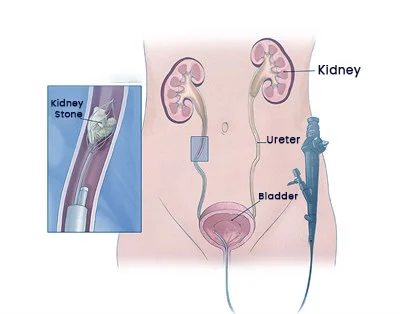
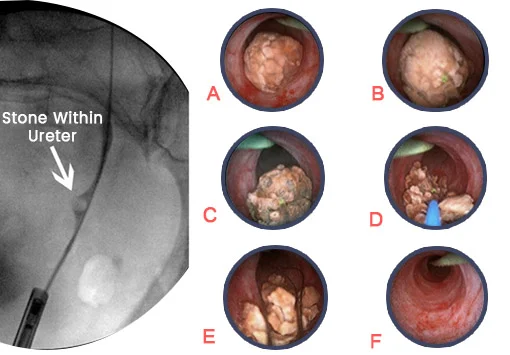
URS (Ureteroscopy) is a form of minimally invasive surgery with a small telescope that is passed through the urethra into the ureter to remove a stone. In most cases, the fragmentation is needed with a laser that allows removing the stone with a gasping device. Surgical intervention is needed in around 10 to 15 percent cases only.
What about the procedure?
URS is an outpatient procedure that means the patient can get back home on the same day. The procedure is done with the use of general anesthesia, but in some cases, regional anesthesia can be used. To prevent infection preoperative antibiotics are given. The procedure of the length can vary from case to case, which can be 20 minutes to 1 hour or maybe longer.
What happens after the procedure?
Following the procedure, the patients are awakened in the operating room and then taken to the recovery room. Once all hospital discharge criteria are met, patients need to get back to the home. A family member or friend will accompany you home following the procedure. No limitations on physical activity are needed after discharge. The patients should take one day off from work following the treatment.
What are Stents?
🔹 Purpose of Urethral Stent: A soft, hollow tube that allows urine to pass from the kidney through the ureter to the bladder; often placed after SRS surgery.
🔹 Stent Removal String: A string is left attached to the stent and comes out through the urethra to help remove the stent 2–5 days after surgery.
🔹 Duration & Side Effects: Stent may cause urinary irritation or kidney pain, especially after removal. It usually stays in place for about 4 weeks if there’s ureter injury or stone removal.
Are there any complications?
Like with any surgical procedure, complications can occur but they are rare. The complications with URS includes:
🔹 Not able to remove the stone
🔹 Perforation of the ureter
🔹 Injury to other structures such as ureter, bladder, urethra, or kidney
🔹 Urinary infection
🔹 Need for additional procedures
🔹 Ureter may have scar or stricture (<5% will need surgical repair)
🔹 Blood in the urine
🔹 Immediate surgical repair of an injured ureter (<1% cases)