Gallstones Treatment in Ludhiana | Advanced Gallbladder Surgery
Best Hospital for Gallstone Surgery in Punjab | Experienced Surgeons
Affordable Gallbladder Stone Surgery in Ludhiana, Punjab
Find the best Gallstones or Bladder Stones Treatment in Ludhiana, Punjab where the most trusted Aastha Kidney & Super Speciality Hospital provides Gallstones or Bladder Stone Surgery, treatment from the reputed and experienced Urologist and specialist doctor in Ludhiana at an affordable cost. Stones in the kidney may impact every portion of the urinary tract like the bladder.
Gallstones or Bladder Stones Treatment in Ludhiana, Punjab The kidney stones are hard deposits of minerals and salts that develop within the kidneys, often called nephrolithiasis, renal calculi, and urolithiasis. The other factors of kidney stones are eating unhealthy food, extra body weight, certain medical problems, and other nutrients as well as medications. Stones also develop when urine is condensed to facilitate the crystallization and adherence of minerals. Bladder stones are of variegated colors and types.
This may be very difficult to remove kidney stones, although the stones typically cause little lasting harm if they can be detected immediately. You may simply require pain relief and fluids to remove a kidney stone depending on the condition.
Interesting facts on Bladder stones
Some of the interesting facts which help you understand better about the bladder stones are:
- Bladder stones are customarily experienced in men who fall over the age group of 50.
- Prevalence of bladder stones can be the reason for an underlying medical ailment.
- With bladder stones, the urine color changes and urination comes with pain.
- The occurrence of stone in the bladder is unwonted in women.
- Bladder stones can be the reason for blood in the urine.
Diagnosis
Diagnosis and tests for kidney stones include-:
- Tests in blood-:Tests of your blood can show excessive calcium or uric acid. The findings of blood tests help to track your kidney’s health which will lead the doctor to search for more problems.
- Check urine-: The 24-hour urine check will indicate that you excrete too many minerals that shape stone or too few stone-preventing substances. Your doctor may ask for two consecutive days to obtain urine for this examination.
- Imaging-:Current imaging scans may identify urinary kidney stones. And minuscule stones may be shown in high-speed or dual-energy CT. Simple abdominal rays are less common because small kidney stones can be missed in this kind of imaging test.
- Another imaging option to diagnose kidney stones is ultrasound, a non-invasive, rapid, and easy to perform test.
- Passed stones analysis-: You might be told to urinate to gather stones that you move via a strainer. Laboratory analysis will show your stones’ make-up in your kidney. This information is used by your doctor to determine why your kidney stones are causing them and to develop a plan to prevent more renal stones.
Treatment
Well, treatment for renal and kidney stones depends on the condition, type, and stone size.
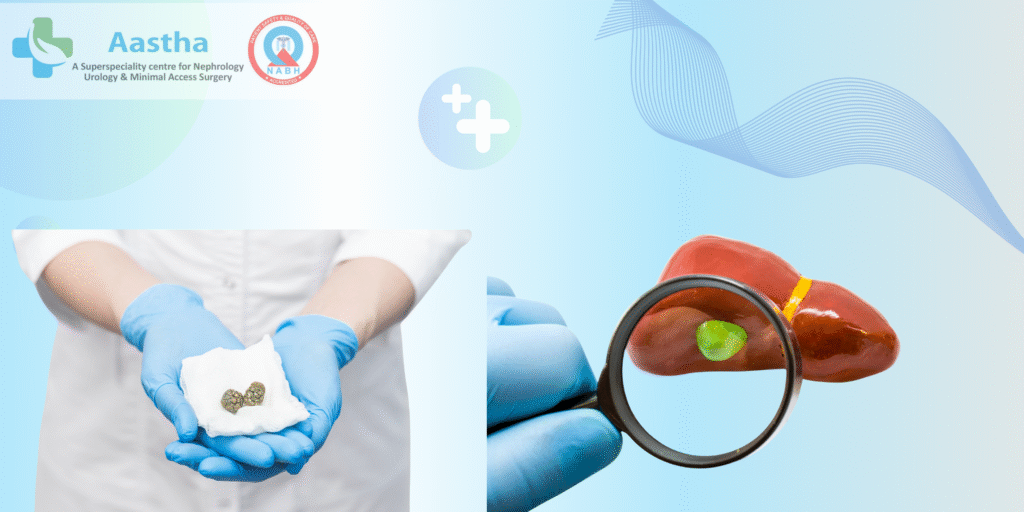
Treatment Options for Small and Large Kidney Stones
The treatment approach for kidney stones depends on factors such as the size, location, symptoms, and overall health condition of the patient.
Small Kidney Stones: Small kidney stones with mild or no symptoms can often be managed through medications and lifestyle changes. Your doctor may recommend:
- Drinking plenty of water to help flush out the stones naturally.
- Pain-relieving medications such as ibuprofen or naproxen sodium to manage discomfort.
- Medications like Tamsulosin (Flomax), which help relax the muscles of the ureter and make it easier for the stone to pass. In some cases, a combination of medicines such as dutasteride and tamsulosin may be prescribed based on the patient’s condition.
Large Kidney Stones: Larger kidney stones may require advanced treatment procedures for safe and effective removal. Depending on the size and position of the stone, treatment options may include:
- Extracorporeal Shock Wave Lithotripsy (ESWL): A non-invasive procedure that uses high-energy sound waves to break kidney stones into smaller fragments, allowing them to pass naturally through urine.
- Percutaneous Nephrolithotomy (PCNL): A minimally invasive surgical procedure used for removing very large kidney stones. It involves making a small incision in the back through which a thin instrument is inserted to locate and remove the stone from the kidney.
- Ureteroscopy (URS): A procedure in which a thin, lighted tube called a ureteroscope is passed through the urinary tract to reach the ureter or kidney. The surgeon uses this instrument to locate, break, and remove stones effectively.
At Aastha Kidney & Super Speciality Hospital, advanced kidney stone treatments are performed by experienced specialists using modern techniques to ensure safe removal, faster recovery, and better patient outcomes.
Is it possible to remove the stones without surgical intervention?
Many individuals are looking for ways not to get the surgery. If you are one of them, then you can take the medication but you need to be mindful that this option takes months or even years.
The probability of getting the desired results is low. It might work but the chances of getting the problem again are higher.
It is safe to say that Medications are not the best solution for bladder stones. Also, every patient won’t get the same results. For instance, the medications are a suitable option for those who cannot undergo the medical intervention due to health issues. This short-term solution won’t give you long-term relief. Ask your doctor to understand better the possible treatment options.
What happens if you delay or avoid getting the bladder stones removed?
Doctors always suggest getting the gallbladder stones removed on time, otherwise, it increases the chances of future complications. If you notice pain and indigestions, then it likely means there has been obstruction which stays for less time in the gallbladder duct. In medical science, it is known as acute cholecystitis.
Complications are likely to increase when gallstone slips down like pancreatitis and obstructive jaundice. The best possible choice is to get the surgery in the short order. If you think of postponing the surgery, then you are putting your life at risk. Talk to your doctor to make yourself more aware of the situation.
What are the preventive methods?
The bladder stones occurrence is due to various medical reasons and there is no hard & fast rule to prevent them. Bear in mind, if you are experiencing the urinary symptoms which come with blood, pain, and discoloration, then medical intervention is needed as early as possible. Here are some of the options which you can give a try:
- Increase the daily intake of fluids to prevent bladder stone.
- Patients with urinary tract infection feel that the bladder contains urine when they are done. What you can do is, urinate after 10 to 20 seconds following the first attempt. In medical terms, it is known as double voiding which prevents stone formation.
- Patients with an enlarged prostate can empty their bladder by preferring the option to sit down. This factor is likely to slow down or prevent the bladder stone occurrence.
What are the beneficial food options for a healthy bladder?
- Dark and leafy green vegetables
- Milk
- Low-fat dairy
- Tomatoes
- Nuts
- Beans
- Bell peppers
- Citrus fruits
- Fish and shellfish
- Tofu
- Lentils